Winter has a reputation. Cold, gray, unpredictable, maybe something to get through rather than embrace. And if you’re planning photos in Michigan’s Upper Peninsula, it’s fair to wonder whether winter is working against you before you even begin. This question comes up often, and it usually sounds something like this: Is winter actually a bad time for photos up here? The short answer is no — but it is different. And like most things, whether it’s right for you depends on what you want your photos to feel like.
The Upper Peninsula spends a good portion of the year in winter. Snow, quiet trails, frozen shorelines, overcast skies, and shorter days are part of daily life here. That reality shapes how photos look and how sessions feel. Winter doesn’t give you everything other seasons do, but it offers its own set of strengths when you know what to expect.
This post isn’t here to convince you to choose winter. It’s here to give you a clear picture of what winter photography in the U.P. actually looks like so you can decide whether it fits what you’re envisioning.
The Most Common Concerns About Winter Photos
When people hesitate about winter sessions, the concerns are usually practical rather than aesthetic. And they’re valid. Cold is the first thing people worry about. Standing still in low temperatures doesn’t sound appealing, especially if you’re already unsure about being in front of a camera.
Light is another concern. Winter skies can feel flat or gray, and many people worry photos will look dull or lifeless without strong sunlight. There’s also uncertainty around the landscape itself. Bare trees, muted colors, and frozen ground can feel stark compared to the lush greens of summer or the warmth of fall.
And then there’s the unpredictability. Will there be snow? Will it melt? Will conditions change at the last minute? These questions aren’t overthinking — they’re realistic. Winter in the Upper Peninsula asks you to work with what the day gives you rather than control every variable. Understanding that upfront makes all the difference.

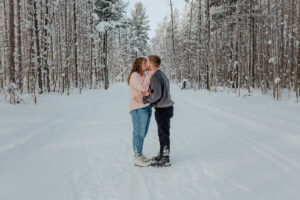
What Winter Actually Looks Like in the Upper Peninsula
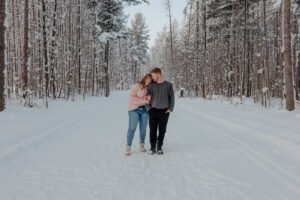
Winter reshapes the landscape. Snow softens edges. Trails feel quieter. When there is snow, it reflects light back into scenes in a way other seasons don’t, helping faces stay evenly lit without harsh contrast. When there isn’t snow, the landscape leans earthy and minimal, with browns, grays, and evergreens grounding the frame and keeping attention focused on the people rather.
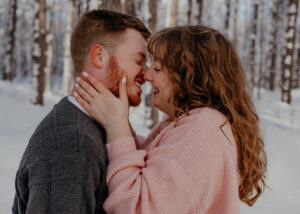
From a photography standpoint, winter can offer beautifully even light. Overcast days act like a natural diffuser, which helps skin tones stay soft and consistent from frame to frame. Shadows are gentler and highlights are easier to control, especially in forested or wooded areas.
Sunny winter days photograph differently, but not necessarily worse. Direct sun tends to sit lower in the sky, which can create stronger contrast and longer shadows. That can work well when there’s snow to bounce light back into the scene, but it requires more intentional positioning and timing. In winter, the quality of light matters more than the presence of sun, and sessions often benefit from adapting to what the day naturally offers rather than chasing a specific look.
Winter Photos in the Upper Peninsula: Snow or No Snow
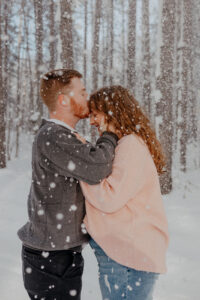
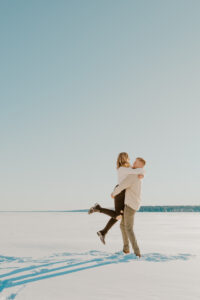
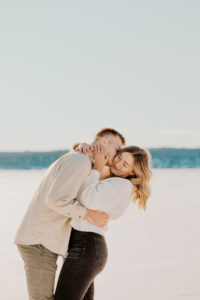
Snow tends to dominate conversations around winter photos, but it isn’t the only version of winter worth photographing. Snow-covered sessions bring texture and brightness. Pines dusted with fresh snow, frozen shorelines, and soft snowfall can add movement and depth without overwhelming a scene.
Snow-light or snow-free winters look different, but they aren’t a loss. Colors stay neutral and grounded. These sessions often feel quieter with less visual noise competing for attention. The key is expectation. If you’re hoping for a full winter wonderland, it’s worth knowing that snow isn’t guaranteed. But if you’re open to winter as it is — whatever shape it takes that day — both versions photograph beautifully in their own way. This is one of the reasons winter photos in the Upper Peninsula feel so tied to place. You’re not recreating something; you’re documenting what the season actually looks like here.
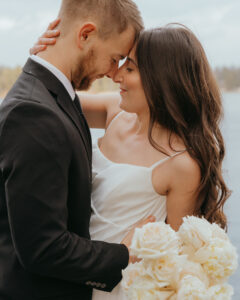
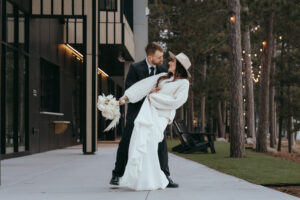
How to Stay Comfortable During Winter Photo Sessions
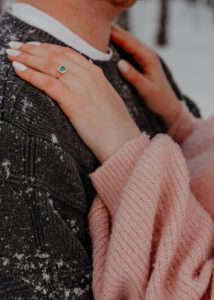
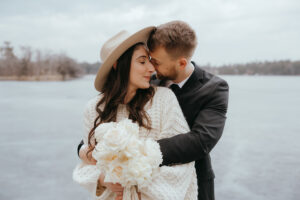
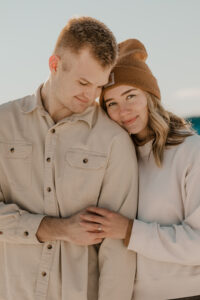
Cold doesn’t have to take over a session. Comfort is something we plan for, not something we hope for. Layering matters, but it doesn’t need to be complicated. Warm base layers make a noticeable difference, even under lighter outer pieces. Thick knits, wool, lined tights, and insulated boots go a long way in keeping you comfortable without feeling bulky.
Movement is another key factor. Walking, standing close, and shifting positions naturally helps keep bodies warm. Winter sessions rarely involve standing still for long stretches. We keep things moving at an easy, relaxed pace. Breaks are always part of the plan. Warming up in the car for a few minutes, adding layers between locations, or adjusting timing if the cold sets in sooner than expected keeps the experience manageable.
Comfort directly affects how relaxed you feel, and relaxed people always photograph better. When you’re not focused on how cold you are, it’s easier to settle into the moment.
Winter Light and Timing: What Actually Matters
Winter light behaves differently, and understanding that helps set realistic expectations.
Cloudy days are common, and that’s not a drawback. Overcast skies create even, consistent light that’s flattering and calm. Bright winter sun can be beautiful too, especially when it reflects off snow, or we can time it well for a golden glow but it can be less predictable and harsher at certain angles so posing becomes key.
Because daylight hours are shorter, timing matters more. Late afternoon sessions often work well in winter, offering the most consistent light and slightly warmer temperatures. However it requires flexibility and awareness of how quickly light changes.
Rather than chasing a specific look, winter sessions work best when they respond to the conditions of the day. That adaptability keeps the focus on the experience instead of fighting the environment.
What Makes Winter Sessions Feel Different
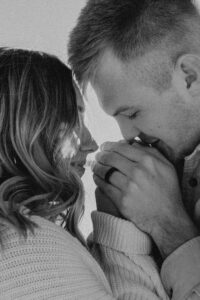
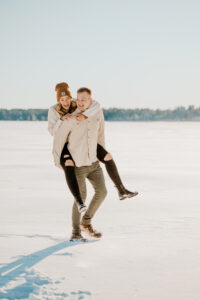
Winter removes distractions. There’s less visual clutter in the landscape. Fewer people are out on trails. Locations feel quieter. That simplicity allows attention to shift toward the people in front of the camera rather than what’s happening around them. This doesn’t mean winter sessions are serious or still. They can be playful, warm, and relaxed.
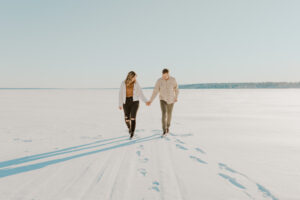
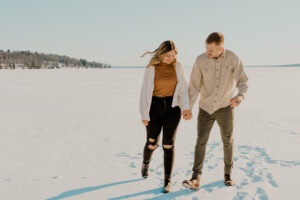

When Winter Might Not Be the Right Choice
Winter isn’t for everyone, and that’s okay. If lush greenery, open water, or floral color palettes are central to your vision, another season may serve you better. If you prefer sessions with minimal concern for temperature or timing, warmer months offer more flexibility.
Winter asks for a bit of adaptability and comfort with uncertainty. Choosing it works best when you’re open to what the season offers rather than trying to make it look like something specific.
Choosing the Season That Fits Your Photos
Winter photos in the Upper Peninsula aren’t better than photos from other seasons. They’re simply different. They’re quieter. The landscapes are simpler, more minimalist. The light softens. And this can be a combination that feels grounding rather than limiting.
If you’re considering winter photos in the Upper Peninsula, the most important question isn’t whether winter is “good” or “bad.” It’s whether the way winter feels here aligns with what you want your photos to reflect. When expectations match the season, winter has a way of settling into something really meaningful — no convincing required.
+ view the comments